
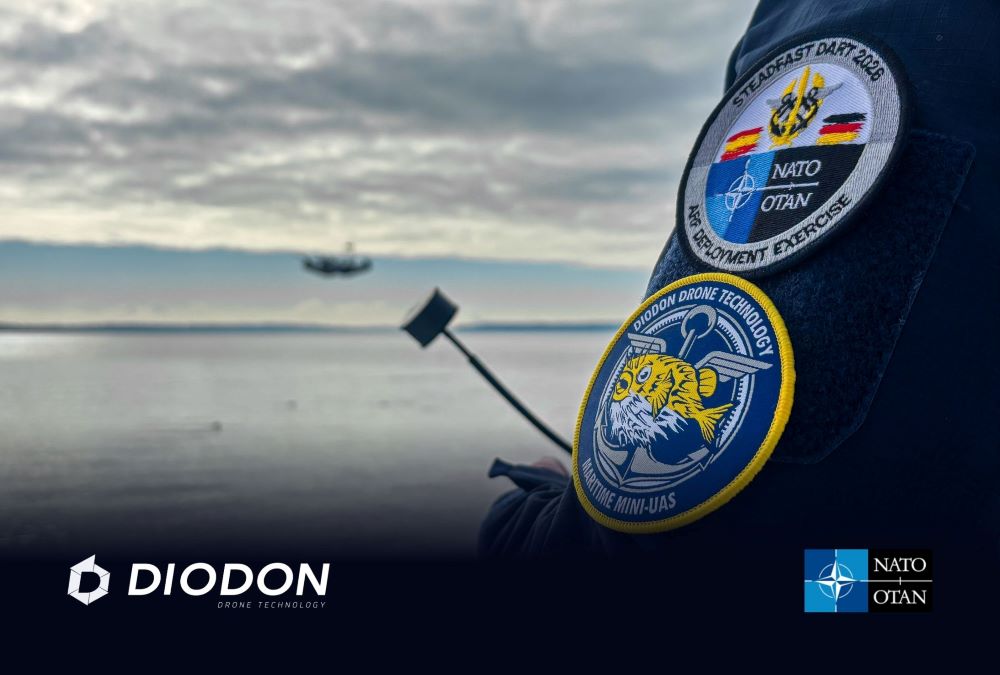
NATO exercises Steadfast Dart & Heimdall: DIODON systems tested in cold maritime environments
In early 2026, DIODON Drone Technology took part in two major NATO exercises: Steadfast Dart and Heimdall, providing opportunities to deploy its maritime UAV systems in demanding operational environments.
Conducted alongside allied forces and industrial partners, these exercises allowed DIODON to test its systems across different operational contexts, from cold-weather experimentation in the Norwegian High North to littoral operational scenarios involving special operations forces.
Across these deployments, DIODON confirmed the resilience of its drones in extreme climatic conditions, continued experimentation on UAV × USV interoperability, and supported ISR missions within complex operational frameworks.
Validating UAV resilience in extreme cold environments
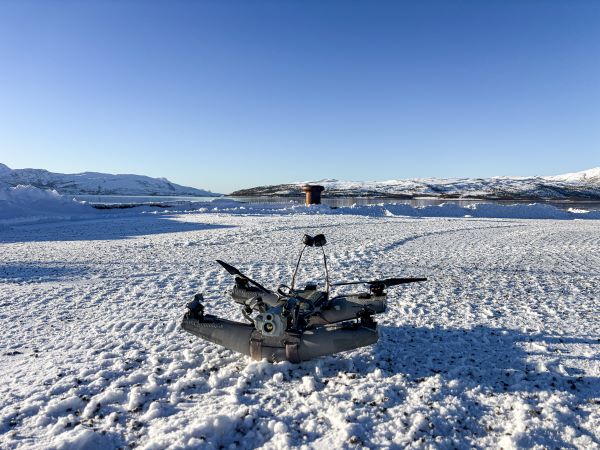
The Heimdall exercise, organized by the NATO Centre of Excellence Cold Weather Operations (COE-CWO) in Norway, provided a particularly demanding testing environment.
DIODON systems were exposed to extremely low temperatures, harsh weather conditions, difficult terrain and limited infrastructure, while maintaining a maritime operational context.
These conditions offered a relevant testing ground for systems designed to operate in demanding maritime environments.
This experimentation also echoes DIODON’s involvement in the TDRIC programme (Tactical Drones in Rain and Icing Conditions), dedicated to studying UAV behaviour in degraded weather conditions.

Continuing experimentation on UAV × USV interoperability
During the Heimdall exercise, DIODON also continued its work on UAV × USV interoperability.
The DIODON HP30 was deployed from the Mariner USV developed by Maritime Robotics, a platform on which DIODON systems had already been integrated during the NATO Task Force X Baltic experimentation.
These trials contribute to ongoing efforts aimed at validating the deployment of maritime UAV systems from autonomous surface platforms within operational contexts.
ISR capabilities supporting littoral operational scenarios
During Steadfast Dart 26, NATO’s main exercise of the year, DIODON systems were deployed in support of VBSS and beaching-type scenarios involving special operations forces.
Equipped with high-end EO and IR sensors, the DIODON HP30 provided ISR capabilities supporting detection and situational awareness during complex littoral manoeuvres in particularly cold and demanding maritime environments.
Following the exercise, DIODON systems were showcased within the area dedicated to equipment tested and used by NATO, alongside the Spanish Special Operations Forces, offering an opportunity to exchange with the forces and operational stakeholders involved in the exercise.
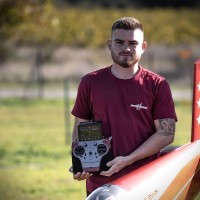
“Continuing to operate DIODON systems during exercises as demanding as those conducted by NATO is something we take real pride in. Flying in extreme environments while deploying from a USV strongly confirms both the performance of our drones and our expertise in UAV x USV interoperability.”
— Pierre-Louis VARLET, Instructor & Test Remote Pilot | DIODON Drone Technology.