
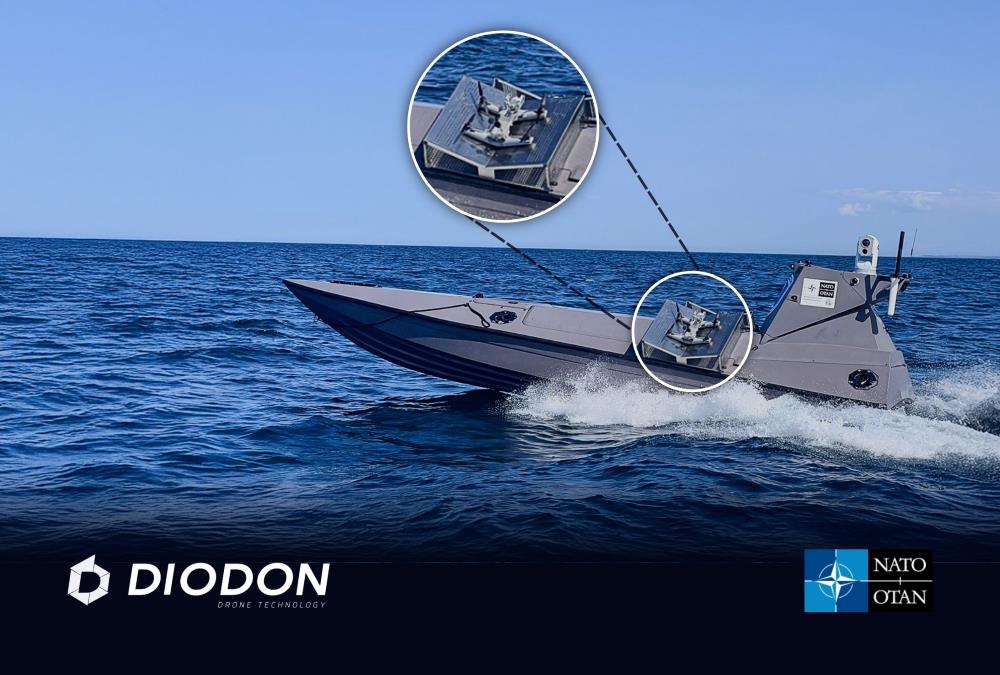
In 2025, DIODON Drone Technology was selected by NATO Allied Command Transformation (ACT) to participate in Task Force X Baltic, a multinational experimentation dedicated to the integration of autonomous systems into naval operations.
For DIODON, the objective was clear: demonstrate the operational deployment of a maritime UAV from multiple autonomous surface vessels, within a structured allied framework.
Development of a module for deploying UAV from USV
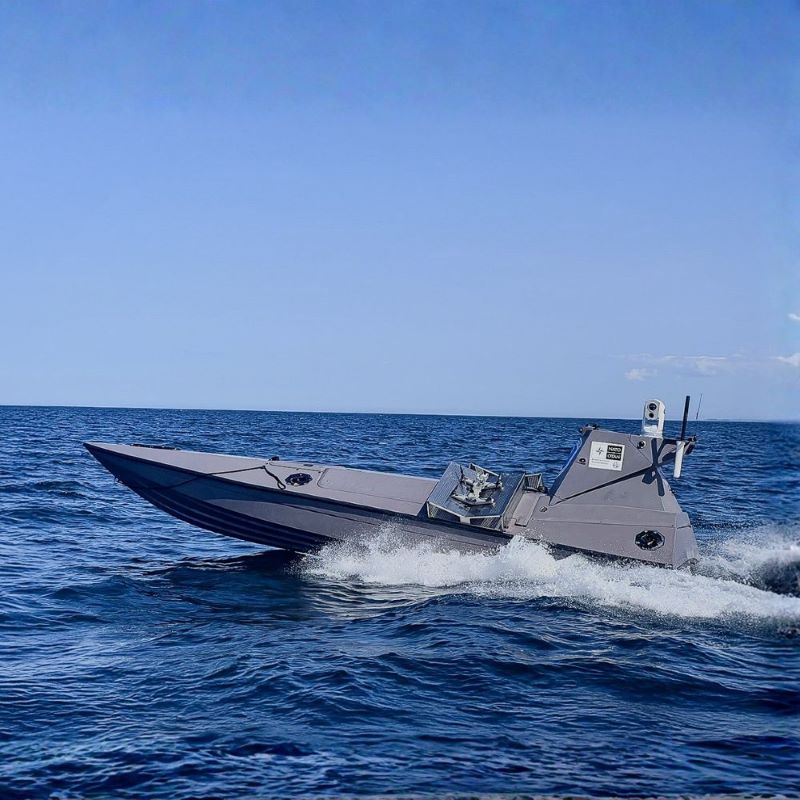
A central component of this experimentation was the development of a dedicated module for deploying UAV from USV: the DIODON Launcher.
Designed and engineered in only a few weeks prior to deployment, the system was conceived to enable stable and repeatable launch sequences of the DIODON HP30 from autonomous surface vessels operating in real sea conditions.
The module proved fully operational throughout the campaign, enabling repeated UAV deployments from three distinct USV architectures. Its performance confirmed DIODON’s ability to rapidly design, adapt and field naval hardware integration solutions within constrained timelines.
Deployment across three allied USV platforms
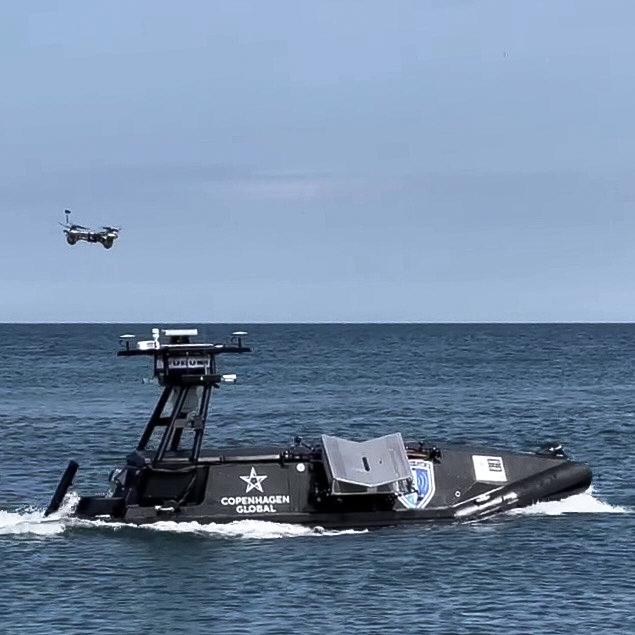
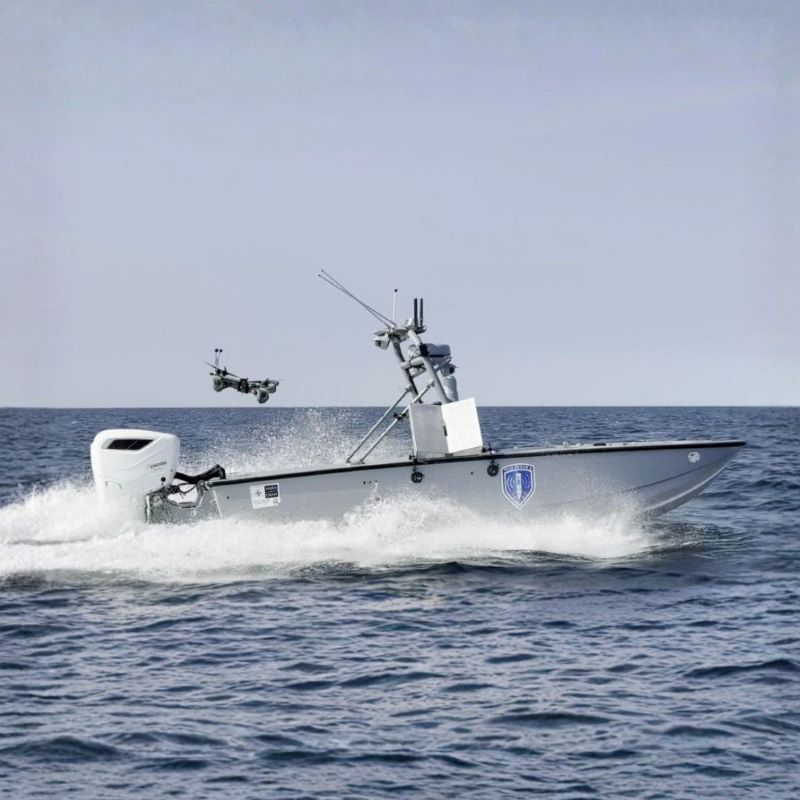
During the experimentation, the DIODON HP30 was deployed from Norwegian, American and British USVs, each with different structural and operational configurations.
The ability to integrate across heterogeneous platforms, without platform-specific redesign, validated DIODON’s naval integration approach: compact, marinized systems designed for interoperability from the outset.
Operations were conducted in variable Baltic maritime conditions, including wind exposure and platform instability. Across more than 100 flight hours, the system demonstrated sustained reliability and full ISR capability exploitation.
Operating within an allied C2 environment
Beyond hardware deployment, DIODON operated within the SitaWare C2 system, ensuring ISR data connectivity during the experimentation.
This functional interfacing validated the DIODON HP30’s ability to operate coherently within a broader command structure.
A key milestone in maritime UAV x USV interoperability
Task Force X Baltic represents a structured operational validation of DIODON’s UAV × USV interoperability capabilities:
Rapid development and fielding of a dedicated launch module ;
Deployment from three allied USV platforms ;
3 weeks of maritime experimentation & more than 100 hours of maritime flight operations;
Functional C2 connectivity within a multinational framework (SitaWare).
In a context where distributed autonomous systems are becoming central to naval operations, this experimentation confirms DIODON’s positioning as a specialist in maritime-native UAV integration on autonomous surface vessels.

“Task Force X validated our ability to develop and field dedicated hardware within tight timelines while ensuring effective software integration. It marks an important step in our roadmap, laying the foundation for more persistent and scalable UAV x USV interoperability.”
— Roman LUCIANI, CTO & Co-founder | DIODON Drone Technology.